
Best Time to Visit Iceland: A Complete Seasonal Travel Guide
That makes many travelers ask the same question: When is the best time to visit Iceland?
Some visitors dream of road trips under the midnight sun, while others hope to watch the Aurora Borealis dance across the winter sky, and travelers comparing nearby Nordic destinations may also research the best time to visit norway.
This guide explains the best time to visit Iceland for different travel styles, budgets, and activities so you can choose the season that fits your adventure.
Best Time to Visit Iceland at a Glance
There isn’t one perfect month for everyone.
Here’s a quick overview.
| Travel Goal | Best Time |
|---|---|
| Mild Weather | June to August |
| Northern Lights | September to March |
| Road Trips | June to September |
| Ice Caves | November to March |
| Whale Watching | April to September |
| Hiking | June to September |
| Fewer Crowds | April, May, September, October |
| Lower Prices | November to April (excluding holidays) |
When Is the Best Time to Visit Iceland?
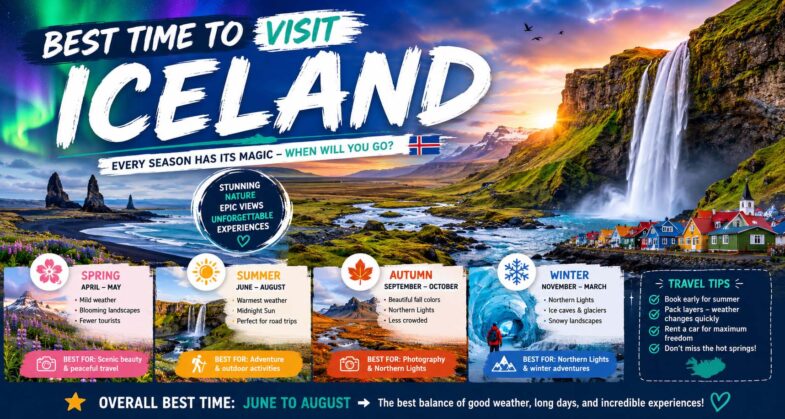
If you’re asking when is the best time to visit Iceland, summer is usually the easiest season for first-time visitors.
From June through August, you’ll enjoy:
- Long daylight hours
- Comfortable temperatures
- Open mountain roads
- Green landscapes
- Easy driving conditions
This is also the busiest and most expensive time of year.
If your priority is the Northern Lights, winter becomes the better choice.
Best Time of Year to Visit Iceland by Season
Each season offers a completely different experience.
Spring (April to May)
Weather gradually becomes milder, waterfalls are powerful from melting snow, and tourist numbers remain moderate.
Highlights include:
- Puffin season begins
- Fewer crowds
- Lower accommodation prices than summer
- Longer daylight hours
Average temperatures:
1°C to 10°C (34°F to 50°F)
Summer (June to August)
The famous Midnight Sun provides nearly endless daylight, making sightseeing easy.
Top activities include:
- Ring Road road trips
- Glacier hiking
- Whale watching
- Camping
- Highland exploration
- Puffin watching
Average temperatures:
10°C to 15°C (50°F to 59°F)
Although temperatures are cool compared to many destinations, summer is generally the warmest time of year.
Autumn (September to October)
Autumn offers an excellent balance.
The landscapes turn golden, crowds begin to disappear, and the first Northern Lights often become visible.
Advantages include:
- Lower prices
- Beautiful fall scenery
- Comfortable temperatures
- Good photography conditions
Average temperatures:
2°C to 11°C (36°F to 52°F)
Winter (November to March)
Visitors come for:
- Northern Lights
- Ice caves
- Snow-covered waterfalls
- Glacier adventures
- Hot springs
Daylight hours become much shorter, especially in December.
Average temperatures:
-1°C to 4°C (30°F to 39°F)
Iceland Best Time to Visit for Different Activities
Your ideal travel month depends on your interests.
Road Trips
Best months:
- June
- July
- August
- Early September
Most mountain roads remain open, making it easier to explore the country.
Hiking
Summer offers the safest hiking conditions.
Popular trails include:
- Landmannalaugar
- Fimmvörðuháls
- Laugavegur Trail
Waterfalls
Waterfalls are impressive year-round.
Spring provides especially powerful water flow because of snowmelt.
Whale Watching
The best season generally runs from April through September.
Summer offers the highest chances of seeing multiple species.
Best Time to Visit Iceland for Northern Lights
The best time to visit Iceland for Northern Lights is generally from September through March.
Good viewing conditions require:
- Dark skies
- Clear weather
- Low light pollution
The Northern Lights are never guaranteed, but visiting during these months greatly improves your chances.
Many travelers also book guided evening tours that monitor weather and aurora forecasts, while those comparing Aurora destinations may research the best time to visit alaska.
Monthly Breakdown
Here’s a quick month-by-month guide.
| Month | What to Expect |
|---|---|
| January | Snow, ice caves, Northern Lights |
| February | Winter adventures continue |
| March | Longer daylight, Northern Lights remain possible |
| April | Spring begins, fewer tourists |
| May | Green landscapes, puffins arrive |
| June | Midnight Sun, road trip season |
| July | Warmest weather, peak tourism |
| August | Excellent outdoor activities |
| September | Fall colors and Northern Lights begin |
| October | Cooler weather and fewer crowds |
| November | Ice cave season starts |
| December | Holiday atmosphere and long nights |
Weather and Climate
Iceland’s weather changes quickly.
You may experience:
- Sunshine
- Rain
- Wind
- Snow
all within a single day.
Packing layers is much more effective than relying on one heavy jacket.
Strong winds are common throughout the year, even during summer, a useful comparison for travelers researching the best time to visit scotland.
Cheapest Time to Visit Iceland
Budget travelers usually find the lowest prices during:
- November
- January
- February
- Early March
(excluding Christmas and New Year holidays)
During these months, you’ll often find:
- Lower hotel prices
- Discounted flights
- Fewer tourists
Winter activities remain available despite the colder temperatures.
Suggested 7-Day Iceland Itinerary
| Day | Activity |
|---|---|
| Day 1 | Explore Reykjavik |
| Day 2 | Golden Circle |
| Day 3 | South Coast waterfalls |
| Day 4 | Glacier or ice cave tour |
| Day 5 | Black Sand Beach and nearby attractions |
| Day 6 | Blue Lagoon or Sky Lagoon |
| Day 7 | Northern Lights tour or city exploration |
Summer travelers can extend this into a complete Ring Road journey.
Transportation Tips
During winter:
- Check road conditions daily.
- Drive carefully.
- Consider renting a four-wheel-drive vehicle.
Public transportation outside Reykjavik is limited compared to many European countries.
Guided tours are another excellent option if you prefer not to drive.
Accommodation Advice
Book accommodations early if traveling during:
- June
- July
- August
Popular hotels and guesthouses often sell out months in advance.
Winter travelers usually have more flexibility, though Northern Lights packages can still be popular.
Travel Costs
Iceland is known for being one of Europe’s more expensive destinations.
Typical daily budget:
| Travel Style | Estimated Daily Cost |
|---|---|
| Budget | $100–$180 |
| Mid-Range | $200–$350 |
| Luxury | $400+ |
Cooking some meals and traveling during shoulder seasons can help reduce expenses.
Packing Checklist
No matter the season, pack clothing suitable for changing weather.
Bring:
- Waterproof jacket
- Waterproof pants
- Warm layers
- Hiking boots
- Gloves
- Hat
- Thermal clothing (winter)
- Swimsuit for hot springs
- Camera
- Portable charger
Even summer evenings can feel cool.
Family Travel Tips
Families often prefer summer because of:
- Longer daylight
- Easier driving
- Better hiking conditions
- More outdoor activities
Popular family attractions include:
- Blue Lagoon
- Whale watching
- Golden Circle
- Reykjavik museums
- Waterfalls
Solo Travel
Iceland is widely considered one of the safest countries for solo travelers.
Solo visitors often enjoy:
- Group excursions
- Hostels
- Campervan travel
- Photography tours
Following weather updates is especially important when exploring remote areas alone.
Common Mistakes to Avoid
Underestimating the Weather
Always prepare for changing conditions.
Driving Too Fast
Road conditions can change quickly, particularly in winter.
Skipping Accommodation Reservations
Peak summer accommodations fill up early.
Ignoring Road Closures
Mountain roads often close during winter and early spring.
Always check official road updates before traveling.
Frequently Asked Questions
What is the best time to visit Iceland?
For pleasant weather and outdoor activities, June through August is usually the best choice. For the Northern Lights, visit between September and March.
When is the best time to visit Iceland for Northern Lights?
The best viewing season generally runs from September to March when nights are long and dark.
What is the cheapest time to visit Iceland?
November through early March often offers lower prices, except during major holidays.
Is summer too crowded?
Summer attracts the highest number of visitors, especially in July and August. Booking flights, hotels, and rental cars well in advance is recommended.
Can I visit Iceland in winter?
Yes. Winter is ideal for ice caves, snowy scenery, geothermal spas, and the Northern Lights. Travelers should be prepared for shorter days and changing weather.
Plan the Iceland Trip That Fits You
The best time to visit Iceland depends on the experiences you’re hoping to have. Summer offers long days, scenic road trips, hiking, and wildlife, making it ideal for first-time visitors. Winter rewards travelers with dramatic snowy landscapes, glacier adventures, and some of the world’s best opportunities to see the Northern Lights.
Whether you choose the Midnight Sun of July or the dark skies of February, Iceland delivers unforgettable scenery in every season. Match your travel dates with your favorite activities, plan ahead, and you’ll be ready to experience one of the most remarkable destinations on Earth.